
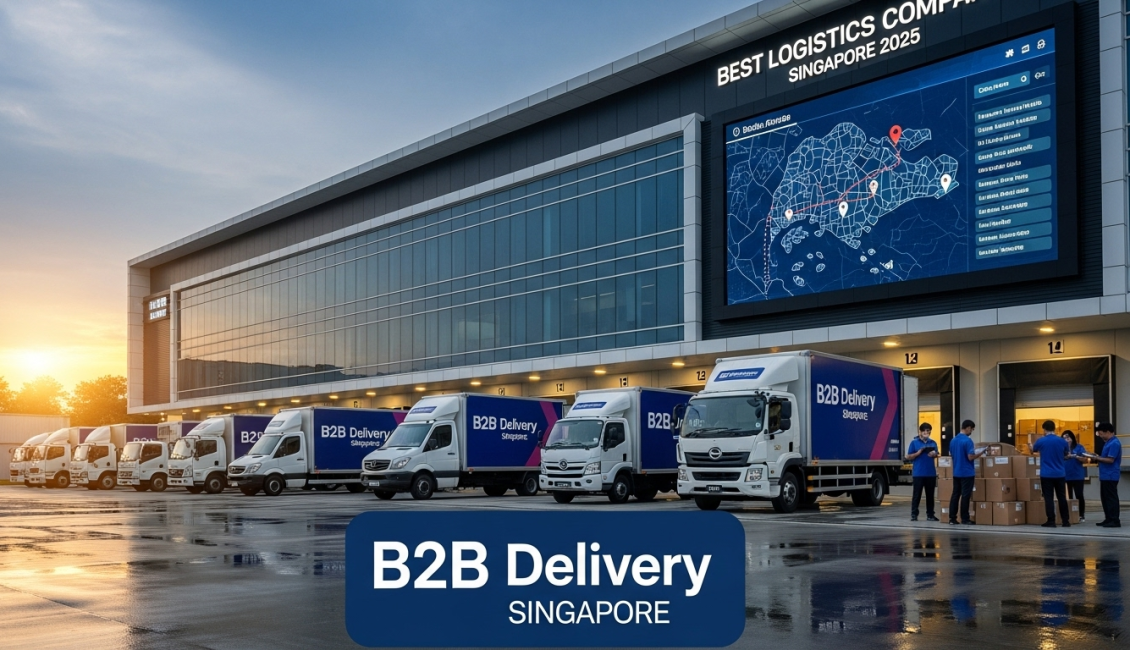
Singapore’s logistics landscape is evolving fast. Between surging e-commerce demand, tighter delivery windows, and higher expectations for visibility, businesses need reliable B2B delivery partners that can deliver speed and certainty. This guide highlights what to look for in the best logistics company Singapore in 2025, focusing on same-day shipping, real-time tracking, and pragmatic B2B strategies.
Market snapshot: why 2025 is a tipping point
Singapore remains a regional logistics hub thanks to its strategic location, advanced infrastructure, and pro-business policies. Post-pandemic consumer behaviour and B2B procurement trends accelerated demand for faster, more transparent delivery services. Key trends shaping choices today:
- Surge in on-demand B2B fulfilment requests from retailers, F&B suppliers, and industrial clients.
- Investment in automation and AI for route optimisation, warehouse robotics and predictive ETAs.
- Growing adoption of green logistics and electric fleets to meet sustainability targets.
- Strong emphasis on data: clients expect detailed, real-time shipment telemetry and performance dashboards.
Understanding these shifts will help procurement teams pick the right partner for their B2B delivery needs in Singapore.
What defines the best logistics company Singapore in 2025
Not every provider that claims fast delivery is right for B2B customers. The top logistics companies combine operational capability with strong systems and service design. Look for vendors that offer:
- Proven same-day shipping capability across business districts and major industrial areas.
- Enterprise-grade real-time tracking and event notifications.
- Scalable warehousing and integrated inventory management.
- Flexible fulfilment models: hub-and-spoke, micro-fulfilment, cross-docking.
- Transparent pricing, SLAs, and performance reporting tailored to B2B contracts.
For practical examples and partner profiles, explore specialist providers who publish their capabilities and sector case studies like the offerings on best logistics company Singapore.
Same-day shipping: what works in Singapore
Same-day B2B delivery is now a baseline expectation for many sectors—retail restocking, spare parts for manufacturing, and urgent F&B supplies. To succeed, a logistics company needs:
- Dense urban pickup networks and last-mile fleets capable of tight time windows.
- Predictive slotting: matching pickup times with capacity and traffic forecasts.
- Integrated order intake from B2B platforms and ERPs for immediate dispatch.
- Contingency routing and priority lanes for critical shipments.
If your business relies on frequent urgent shipments, evaluate providers that document their same-day success rates and coverage maps. A shortlist of vendors with demonstrable urban reach can be found via resources like same-day shipping.
Real-time tracking: more than just a map pin
Real-time tracking is a competitive differentiator for B2B delivery Singapore services. But tracking must be accurate, granular, and actionable:
- Telemetry: GPS, temperature sensors, and tamper alerts for sensitive cargo.
- Event-driven notifications: pickup, loading, en route milestones, arrival, proof of delivery.
- API and EDI integration with client systems so data flows into procurement and invoicing tools.
- Predictive ETAs and delay analytics to manage customer expectations proactively.
Top logistics partners offer dashboards and white-label tracking that integrate into your ordering portal. For provider feature comparisons and integration options check real-time tracking.
B2B delivery Singapore: tailored strategies by industry
The best approach depends on your sector:
- Retail and omnichannel: Micro-fulfilment near central shopping districts, same-day store replenishment, reverse logistics for returns.
- Manufacturing and industrial: Scheduled just-in-time deliveries, dock appointmenting, heavier vehicle capacity.
- F&B and perishables: Cold-chain management, rapid replenishment windows, and temperature monitoring.
- Healthcare and pharma: Chain-of-custody, strict compliance, and traceability.
An experienced B2B logistics partner will offer modular solutions to support different SLA tiers and seasonal peaks. If you need sector-specific examples, examine providers that publish vertical case studies such as b2b delivery Singapore.
Technology and automation: what to prioritise
Innovation isn’t just buzz—practical tech choices reduce cost and improve reliability. Prioritise partners that invest in:
- Route optimisation engines with live traffic feeds.
- Warehouse automation for fast picking and packing.
- Dynamic capacity management and crowd-sourced surge options.
- Open APIs for integration with your TMS, ERP, or e-commerce platform.
Also evaluate maturity of their data practices: reporting cadence, custom KPIs, and the ability to run post-mortem delivery analyses. Many leading regional players publish whitepapers and technology roadmaps; for more on logistics tech implementations see warehouse management.
Cost versus value: how to evaluate proposals
Lowest price rarely equates to lowest total cost of ownership. When comparing bids, score proposals across:
- Service reliability (on-time percentage, damage rate).
- Visibility and integration (APIs, data access).
- Flexibility (scale up/down, seasonal surges, SLA tiers).
- Coverage and fleet types (EVs, heavy-lift, refrigerated units).
- Support and account management (single point of contact, escalation matrix).
Use a weighted scoring matrix to make an objective choice—this reduces the risk of hidden costs from missed deliveries or manual reconciliation.
Checklist: choosing your partner in 2025
Before finalising a contract, run through this checklist with shortlisted providers:
- Demonstrable same-day delivery coverage and success metrics.
- Live-tracking APIs and event-level notification capabilities.
- Proof of experience in your industry and references from similar B2B customers.
- Transparent SLA and penalty clauses for missed commitments.
- Scalable warehousing and flexible fulfilment models.
- Sustainability commitments (if corporate ESG goals matter).
Request a pilot run to validate performance under real-world conditions before committing to long-term contracts.
Final thoughts
Singapore businesses increasingly demand speed, visibility and reliability from their logistics partners. The best logistics company Singapore in 2025 will be the one that pairs robust same-day shipping capacity with enterprise-grade real-time tracking, scalable warehousing and strong integration capabilities. By prioritising proven operational metrics, technological openness, and sector-specific experience, procurement teams can secure B2B delivery Singapore solutions that reduce downtime, lower inventory risk, and support growth.
Selecting the right logistics partner is a strategic decision that directly impacts service quality and working capital. Use data-driven evaluation, run controlled pilots, and align SLAs to your operational priorities to reap the benefits of faster, more transparent B2B delivery.