
Introduction
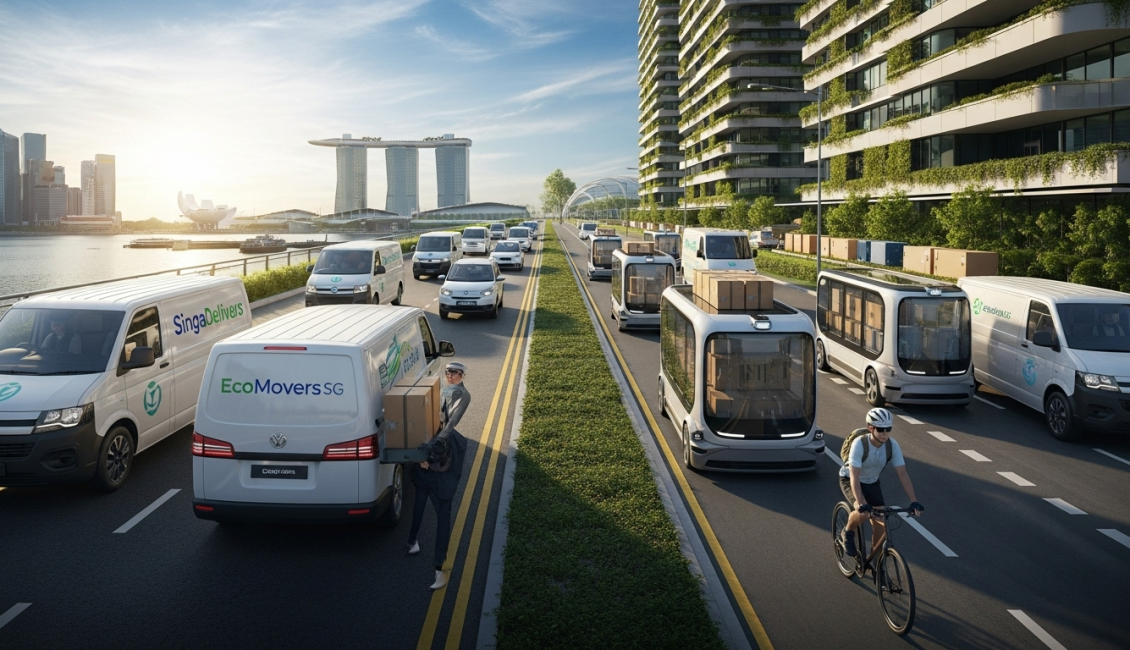
Singapore’s urban mobility and freight ecosystems are rapidly evolving. By 2025, the twin pressures of climate goals and booming e-commerce are reshaping how goods move across the island. This article outlines pragmatic approaches for a modern singapore local transportation solution and singapore cargo transport — combining EV fleets, same-day last-mile operations and sustainable cargo strategies that work in local contexts.
The current landscape: urban density, e-commerce and regulation
Singapore’s compact urban footprint and dense population make last-mile operations both challenging and opportunity-rich. E-commerce has driven higher parcel volumes and customer expectations for same-day delivery, while tight road space and emissions targets push operators to rethink fleet composition and delivery models. At the same time, government policy and city planning increasingly favour electrification, low-emission zones and smart curb management—creating incentives for fleet operators to adapt.
For businesses seeking implementation partners or services, exploring a reliable provider of singapore local transportation solution can accelerate planning and deployment. Singapore local transportation solution
EV fleets: why they matter for cargo transport in 2025
Electrifying medium and light commercial vehicles is one of the most impactful levers to reduce urban emissions. EVs lower operating costs over time, reduce noise pollution (important in residential delivery windows) and position operators to comply with future regulatory requirements. In Singapore, the increasing availability of commercial EVs, growing charger networks and falling battery costs make electrification a viable route for many operators.
Key practical steps
- Right-size vehicles: Use LCVs, electric vans and cargo bikes for urban routes and keep heavy trucks for inter-terminal haulage.
- Pilot before scale: Start with high-density routes, measure energy use, uptime and charging behaviour, then roll out across depots.
- Charging strategy: Mix depot charging for overnight replenishment with opportunistic public charging for flexible operations.
For sourcing and fleet advisory, consider partners experienced in singapore cargo transport to ensure the right EV selection and charging design. Singapore cargo transport
Same-day last-mile: operational models that win in Singapore
Same-day delivery is no longer a differentiator but a baseline expectation in many categories. To deliver reliably in Singapore’s constrained urban space, operators must combine operational agility with technology-enabled planning.
Effective models include:
- Micro-fulfilment and urban hubs: Smaller fulfilment nodes located close to demand reduce trip lengths and enable quicker dispatch windows.
- Dynamic route optimisation: Real-time route replanning that integrates traffic, curb availability and customer time windows cuts idle time and improves first-attempt success.
- Multi-modal delivery: Cargo e-bikes and electric scooters can supplement vans for dense precincts, enabling faster door-to-door delivery and lower costs.
Use platform integrations and telematics to unify order, routing and driver workflows. If your business is evaluating same-day models, review proven solutions from an experienced singapore local transportation solution provider. last-mile delivery
Sustainable cargo strategies beyond vehicle choice
Electrifying vehicles is important, but sustainability requires a systems approach across the supply chain.
High-impact strategies:
- Load consolidation and cross-docking: Consolidate small shipments close to delivery windows to reduce empty miles and improve load factors.
- Off-peak and night deliveries: Shift a portion of deliveries to off-peak hours to avoid congestion and improve speed—paired with community engagement and noise-mitigation measures.
- Green warehousing: Retrofit facilities with solar, efficient lighting and energy management systems to reduce embodied emissions.
- Reverse logistics optimisation: Streamline returns and reuse flows to reduce duplicate movements and materials waste.
Operators aiming for measurable sustainability gains should implement carbon accounting across transport modes and set short-term targets (e.g., EV share, tonne-km reduction, consolidation rates) to track progress. For specialist services on green supply chain design, a singapore cargo transport partner can provide practical frameworks. sustainable cargo strategies
Technology stack: the backbone of efficient operations
Digital tools convert strategy into repeatable performance. Essential components include:
- Fleet telematics and energy monitoring for EVs
- Dynamic route optimisation and delivery orchestration
- Warehouse management with micro-fulfilment capabilities
- Customer communication tools (ETA, seamless returns) to reduce failed deliveries
- Analytics dashboards for KPI tracking (on-time delivery, cost per order, energy per km)
Integrations between TMS/WMS and last-mile platforms reduce manual handoffs, enabling same-day promises to be kept consistently. Vendors and integrators with domain expertise in singapore local transportation solution can tailor configurations for local traffic patterns, service level expectations and regulatory environment. EV fleets
Policy and infrastructure: what operators should watch in 2025
Singapore’s regulators are supportive of cleaner mobility, but also emphasise planning and safety. Operators should monitor these trends:
- Charger network expansion: Public and private charging infrastructure rollout impacts depot strategies and opportunity charging.
- Curb and loading bay management: New parking and loading policies may prioritise high-turnover slots for last-mile providers—real-time booking systems are becoming more important.
- Emissions regulations and incentives: Expect tighter emissions standards and incentive programs encouraging zero-emission vehicles for commercial fleets.
Being proactive in policy engagement—through industry groups or pilot partnerships—helps companies secure access to curb space, chargers and program funding.
Implementation checklist: from pilot to scale
- Route segmentation: Identify high-density corridors for EV pilots and micro-fulfilment placement.
- Vehicle selection: Match payload, range and charging profile to route needs.
- Charging design: Choose depot vs. public charging mix; model energy demand and peak loads.
- Tech integration: Implement route optimisation, telematics and customer-facing tracking.
- Sustainable KPIs: Define targets for EV share, consolidation rates and carbon intensity.
- Partnerships: Collaborate with local fulfilment partners, curb managers and technology providers.
If you need solutions that combine operations, technology and sustainability in one offering, review specialist providers of singapore cargo transport to streamline planning and delivery. cargo transport
Trends to watch beyond 2025
- Autonomous deliveries and robotics: Pilot projects for delivery robots and autonomous cargo vehicles will increase, though widespread use depends on regulatory shifts.
- Battery innovations and second-life applications: Falling battery costs and circular battery strategies will further reduce TCO for EV fleets.
- Consolidation platforms: Shared consolidation services for competing retailers will become more common to improve urban load factors.
Conclusion
A successful singapore local transportation solution in 2025 is one that blends electrified fleets, operational redesign for same-day last-mile, and sustainable supply-chain practices. Operators who combine pragmatic pilots with clear KPIs, technology integration and partnerships will reduce costs, meet customer expectations and align with Singapore’s environmental objectives. The result is a resilient, efficient and greener cargo transport network fit for the next decade.