
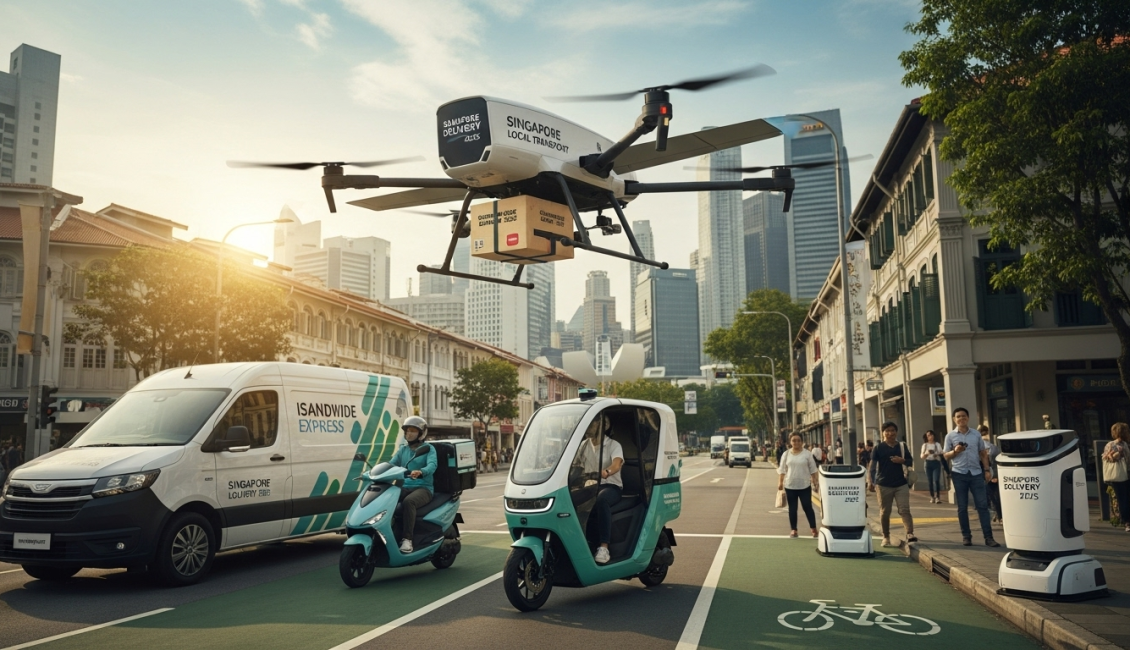
Singapore’s delivery expectations have shifted dramatically. As consumers demand faster turnaround and businesses aim to cut carbon and costs, a modern, efficient local network is essential. This article explores how Singapore island-wide delivery and singapore local transportation solution strategies are evolving in 2025 — from technology and operations to sustainability and practical steps for companies to scale same-day services.
Why island-wide same-day delivery matters in 2025
Speed is table stakes, but the value of fast delivery goes further. Same-day fulfillment increases conversion rates, reduces cart abandonment and strengthens brand loyalty. For a compact city-state like Singapore, the challenge is less about distance and more about congestion, building access, building types (HDB, condos, commercial blocks) and tightly timed consumer expectations.
Businesses that meet these expectations use a combination of smarter route planning, decentralised inventory (micro-fulfillment), and partnerships with agile carriers. For merchants assessing options, a reliable island-wide delivery network that integrates with existing order management systems is a major competitive advantage.
Core components of an efficient local transportation solution
A robust singapore local transportation solution typically includes:
- Centralised visibility: Real-time dashboards and unified order flows so operations can prioritise urgent consignments.
- Flexible capacity: A mix of owned fleet, contracted courier riders and on-demand capacity to scale on peak days.
- Local fulfilment nodes: Micro-fulfilment centres or dark stores positioned to serve high-density demand pockets.
- Intelligent routing: Algorithms that consider congestion, building access windows and load consolidation.
- Customer experience features: Live tracking, delivery time windows and automated delivery notifications.
When these elements are combined, businesses can offer consistent same day delivery across the island without ballooning costs.
Technology trends shaping Singapore local transport in 2025
Several trends are powering higher efficiency and predictability:
- Real-time tracking and visibility platforms: Customers now expect live ETAs; operators need granular telematics to dispatch dynamically and re-route when delays occur.
- AI route optimisation: Machine learning improves with historical data, predictive ETAs and load consolidation that reduce empty miles.
- Micro-fulfilment and hub-and-spoke models: Smaller, strategically located fulfilment points — including automated lockers and dark stores — shorten last-leg travel and enable quicker turnarounds.
- API-first ecosystems: Integrations between e-commerce platforms, payment systems and logistics APIs allow automated bookings, proof-of-delivery capture and smoother returns.
- Electric vehicles and last-mile e-mobility: Cargo e-bikes, electric vans and low-emission fleets reduce operating costs and support Singapore’s Green Plan goals.
By investing in these technologies, companies create a foundation for consistent island-wide coverage and scalable service levels.
Sustainability and regulation: meeting Singapore’s green targets
Sustainable operations are no longer optional. The Singapore Green Plan and corporate sustainability targets are pushing logistics players to adopt low-emission vehicles and cleaner operational practices.
Practical moves include electrifying delivery fleets, shifting to consolidated night delivery windows to reduce daytime congestion, and employing cargo bikes for neighbourhood drops. These tactics decrease emissions and often improve delivery speed in dense neighbourhoods. Operators who align with national policies and demonstrate lower carbon footprints can also gain preferential access to certain urban logistics trials and incentives.
Solving the last-mile puzzle: building access, returns and peak surges
Singapore’s dense urban environment presents unique last-mile challenges: secure access to condominiums, HDB unloading constraints, and strict time windows for commercial buildings. To manage this complexity:
- Use dedicated concierge and carrier access agreements with major developments.
- Offer contactless delivery options with parcel lockers or designated pick-up points.
- Implement predictive staffing for peak periods and major sale events using historical order curves.
Partnering with carriers that specialise in urban access and who offer flexible delivery options gives businesses an operational edge when satisfying urban customers across the island. For many companies, selecting the right last-mile delivery partner is the fastest route to consistent service.
Cost management: balancing speed and profitability
Same-day services are costlier if approached naively. The solution is to mix service tiers and operational levers:
- Tiered promise windows: Offer same-day for premium orders while keeping affordable next-day options for price-sensitive customers.
- Zone-based pricing: Use pricing nudges to incentivise pick-up from central nodes or scheduled delivery slots.
- Consolidation and batching: Group orders by area and time to reduce per-package costs.
- Dynamic staffing: Scale rider and van resources based on predictive demand rather than fixed rosters.
These tactics help businesses deliver speed without sacrificing margin.
Selecting the right logistics partner in Singapore
Choosing a logistics partner requires evaluating capabilities beyond simple coverage:
- Technology integrations: Can their platform plug into your order system and provide real-time visibility?
- Service mix: Do they offer a range from mass deliveries to premium same-day options?
- Urban expertise: Do they understand HDB and condominium access rules, and do they maintain relationships with building operators?
- Sustainability roadmap: Do they operate low-emission vehicles and have plans to decarbonise further?
- Scalability and resilience: Can they handle peak spikes and system outages with contingency plans?
A credible full-service provider will combine local knowledge with digital tools and a clear sustainability plan. When evaluating providers, request case studies and operational KPIs — on-time delivery rate, average delivery time, proof-of-delivery reliability and carbon intensity per parcel. If you’re looking for a capable logistics partner in this market, those are the differentiators to prioritise.
Practical steps for businesses to implement island-wide same-day delivery
- Audit demand: Map order density by postal code and day/time to determine where micro-fulfilment pays off.
- Pilot a hub model: Start with one neighbourhood micro-fulfilment node and measure improvements in speed and cost.
- Integrate tech: Use a TMS or API to centralise orders, allocate runs and monitor KPIs.
- Diversify capacity: Mix in gig couriers, in-house drivers and contracted fleets to balance cost and control.
- Optimize packaging and handling: Reduce handling time and standardise sizes to speed loading and reduce misroutes.
- Communicate clearly: Offer customers precise delivery windows and simple options for rescheduling or locker pickups.
Following this roadmap, retailers and SMEs can extend consistent coverage to all postal zones and maintain profitability.
What success looks like in 2025
A mature singapore island-wide delivery ecosystem in 2025 is digitally orchestrated, uses low-emission vehicles in dense zones, and blends central fulfilment with local nodes to meet same-day promises. Customers enjoy transparent tracking and flexible options; businesses see improved conversion, lower return rates and a smaller carbon footprint.
For Singapore-based businesses and logistics teams, the imperative is clear: combine technology, local know-how and sustainable practices to deliver reliable island-wide service. Adopting these practices positions companies to meet customer expectations, reduce operating costs and align with national sustainability goals—delivering both commercial and environmental value.
By focusing on visibility, smart fulfilment design and partnerships that understand urban delivery nuances, Singapore’s island-wide same-day delivery ambitions are achievable and profitable in 2025 and beyond. For merchants ready to upgrade operations, forging the right alliances and investing in targeted technologies will drive the difference between sporadic speed and consistently great service.
For practical implementation and provider comparisons, evaluate partners by their coverage, tech integrations and sustainability commitments to ensure your business can reliably serve customers across the island.