
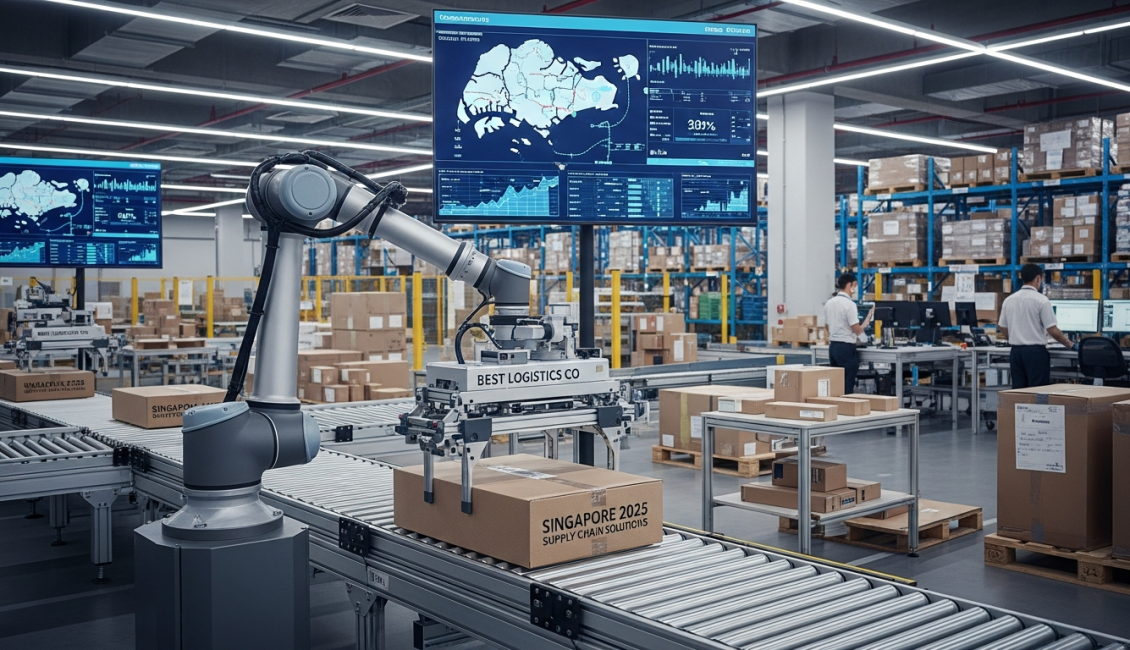
Singapore sits at the crossroads of global trade. In 2025, businesses—whether SMEs selling on regional marketplaces or multinational firms moving high-value goods—need logistics partners who combine reliability, digital capability and sustainability. This article breaks down what to expect from the best logistics providers in Singapore and practical Singapore supply chain solutions you can adopt to stay resilient and competitive.
Why Singapore remains a strategic logistics hub
Singapore’s geographic advantage is long established, but recent investments and policy shifts have deepened its appeal:
- World-class port and air cargo infrastructure (Tuas Port and Changi Airport enhancements) reduce transit variability and improve connectivity across ASEAN.
- Government incentives and digital trade initiatives accelerate customs clearance and cross-border e-commerce flows.
- Strategic location for regional distribution: short transit times to Southeast Asian consumption centers and access to major sea lanes.
These factors mean the best logistics company Singapore-based firms partner with will offer regional orchestration, not just local pickup and delivery.
What defines the best logistics company Singapore in 2025
The bar has risen. Today’s top providers demonstrate strengths across five pillars:
- Digital-first operations: Integrated TMS/WMS, real-time tracking, and AI-based demand forecasting.
- Multimodal capabilities: Seamless sea-air-land solutions, bonded warehousing, and fast transshipment.
- Sustainability focus: Measurable carbon reduction programs and greener last-mile solutions.
- Compliance and security: Robust customs expertise and cold chain certifications where needed.
- Customer-centric service: Transparent pricing, predictable SLAs and data-driven performance reporting.
If you’re searching for the best logistics company Singapore to handle omnichannel or temperature-sensitive inventory, those five pillars should guide your short-list.
Key Singapore supply chain solutions and trends to watch
- Digital Twins and Cloud Platforms: Simulating distribution networks to reduce lead times and inventory costs.
- AI and Predictive Analytics: Smarter procurement and demand-sensing mean lower stockouts and better OTIF (On Time In Full).
- Automated Warehousing & Robotics: Faster throughput, higher accuracy and reduced labour dependency for high-volume fulfilment.
- Green Logistics: Electric vehicles, route optimisation, and sustainable packaging cut emissions and meet buyer expectations.
- Cold Chain Upgrades: Advanced temperature monitoring and certified handling for pharmaceuticals and food.
Adopting these Singapore supply chain solutions helps businesses scale while keeping margins and customer satisfaction healthy. For a provider offering integrated options across these areas, review specialist pages like Singapore supply chain solutions that show service breadth.
Practical KPIs and benchmarks to evaluate partners
Use measurable KPIs when comparing providers. Useful metrics include:
- OTIF (On Time In Full): Target 95%+ for mature operations.
- Order accuracy: Aim for >99% in automated fulfilment centres.
- Transit time variability: Lower standard deviation means more predictable inventory.
- Inventory turnover: Higher is better—reflects efficient replenishment and less working capital tied up.
- Carbon intensity (kg CO2e/tonne-km): Track to show sustainability progress.
Ask potential partners for performance dashboards and sample SLA reports. A transparent partner will share real data and continuous improvement plans.
Selecting the right partner: a decision checklist
- Integrated technology: Confirm APIs, EDI or cloud portals for real-time visibility.
- Proof of regional network: Can they manage ASEAN cross-dock, customs and duties?
- Industry-specific expertise: Cold chain, hazardous goods, or high-value electronics require certifications and insurance.
- Scalability: Seasonal peaks and e-commerce growth demand flexible capacity and automation.
- Sustainability roadmap: Measurable targets and green alternatives for last-mile delivery.
For businesses focused on e-commerce or distribution, investigate providers that advertise strong omnichannel fulfilment and last-mile coverage. A search for providers of last-mile delivery and fulfilment can reveal partners optimized for Singapore’s dense urban geography.
Cost vs service: how to balance trade-offs
Price remains important, but lowest cost often carries hidden risks—longer lead times, higher damage rates, or opaque surcharges. Use a total cost of ownership approach:
- Shipping rate + realistic transit time = true landed cost.
- Inventory holding costs saved through faster replenishment can offset higher per-shipment fees for expedited services.
- Consider value-added services (kitting, returns management, labeling) which reduce your internal overhead.
Providers that show how higher service levels reduce overall working capital often deliver better long-term ROI.
Implementation roadmap for SMEs and enterprises
- Baseline analysis: Map current flows, costs and pain points for inbound, warehousing and outbound.
- Pilot digital tooling: Roll out a TMS/WMS integration on a single SKU family or lane.
- Measure and iterate: Use KPIs (OTIF, order accuracy, lead time variance) and refine processes.
- Scale regionally: Expand to multi-country fulfillment once the model proves reliable.
- Green integration: Introduce EV fleets or optimized routing to lower last-mile emissions.
A structured pilot reduces disruption and gives confidence before a full migration. For partners that can support pilots through to scale, review offerings under categories like 3PL services to confirm end-to-end capability.
Real-world example (composite)
A Singapore-based FMCG retailer moved to a partner that combined bonded warehousing, AI forecasting and an automated fulfilment line. Results within six months:
- Inventory turnover improved by 22%
- Outbound order accuracy rose to 99.6%
- Lead time variability dropped 35%
These gains delivered lower working capital and improved shelf availability across regional markets—illustrating how the right mix of technology and network matters.
Final checklist before signing
- Confirm integration points and onboarding timelines.
- Request references and performance reports for similar clients.
- Negotiate clear SLAs with penalties for repeat failures.
- Validate insurance, customs expertise and contingency plans.
- Verify environmental reporting if sustainability is a priority—seek providers with measurable targets for carbon reduction and green packaging alternatives.
For companies prioritising temperature-sensitive or high-value cargo, review trusted vendors with demonstrable cold chain and security credentials such as those highlighted in cold chain logistics.
Singapore’s logistics landscape in 2025 rewards companies that combine technology, network reach and sustainability. Choosing the best logistics company Singapore means picking a partner who can translate those capabilities into measurable business outcomes—faster replenishment, lower total cost and greener operations—so your supply chain becomes a competitive advantage rather than a constraint.