
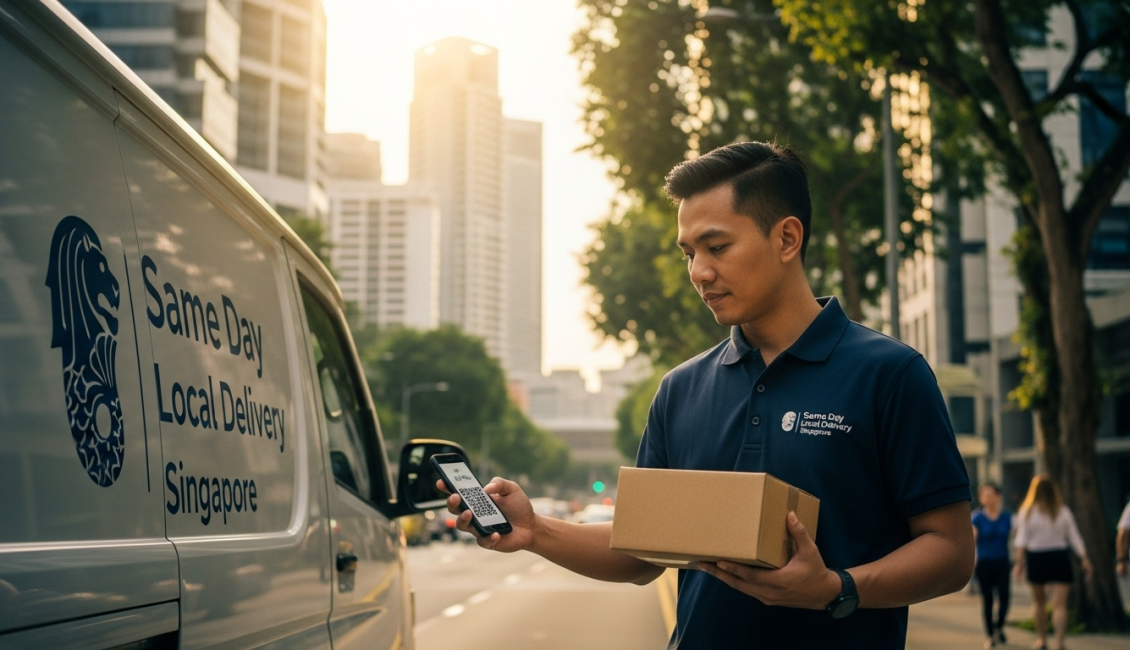
Why same-day local delivery matters in Singapore
Singapore is a compact, high-density market where consumer expectations for speed and convenience are rising. E-commerce, F&B delivery and B2B replenishment increasingly demand rapid, predictable fulfilment — often within hours. Businesses that adopt reliable same-day solutions turn speed into a competitive advantage: improved customer satisfaction, reduced cart abandonment and faster inventory turnover. For companies considering a partner for local fulfilment, modern local delivery Singapore services offer the infrastructure to meet these expectations.
What is point to point logistics and how it applies locally
Point to point logistics refers to direct transfers between two defined locations — for example, warehouse to customer, store to store, or supplier to retail outlet — without intermediate hub processing. In an island city-state like Singapore, this model reduces handling time and the risk of delays. A clear example is a same-day courier service moving stock from a central warehouse in Jurong to a pop-up store in Orchard Road. Companies looking to scale quickly benefit from streamlined routes and fewer touchpoints when they adopt Singapore point to point logistics.
Key trends shaping same-day local delivery Singapore
- Rising expectations for immediacy: Consumers increasingly expect deliveries within hours rather than days. Retailers are responding by offering same-day slots and cut-off times that align with peak shopping windows.
- Real-time tracking and transparency: Live ETA updates, driver details and proof-of-delivery images are now table stakes for quality providers.
- Sustainable, urban fleets: Electric bikes, cargo e-bikes and low-emission vans are growing to meet Singapore’s clean-city goals while navigating dense neighbourhoods.
- API-driven fulfilment: Integration between e-commerce platforms, WMS and carriers allows automated booking, real-time rate checks and consolidated reporting.
These trends explain why more merchants prefer partners that combine technology and local know-how. A reliable partner for local delivery Singapore must deliver both speed and visibility.
Operational benefits of point to point logistics for Singapore businesses
- Reduced lead time: Direct runs remove middle-mile waiting time, enabling same-day or flexible slot delivery.
- Lower handling risk: Fewer transfers mean fewer damaged parcels and lower claims.
- Predictable pricing: Point to point contracts often feature flat or zonal rates that simplify budgeting.
- Faster returns processing: Reverse logistics for returns or repairs can be completed the same day, improving customer experience.
Service providers that specialise in singapore point to point logistics typically show measurable improvements across these metrics.
Choosing the right same-day delivery partner: evaluation checklist
- Coverage and capacity: Verify island-wide coverage and the carrier’s ability to scale during promotions or peak seasons.
- Speed vs cost balance: Check same-day cutoff times, guaranteed windows and surge pricing policies.
- Technology and integration: Look for seamless API, web portal and automated notifications for customers and staff.
- Fleet mix and sustainability: Confirm availability of van, bike and electric options suitable for dense urban areas.
- Security and insurance: For high-value items, ensure appropriate insurance and tamper-evident handling.
A partner that meets these criteria will support both day-to-day operations and growth strategies. For many local businesses, integrating with an experienced local delivery Singapore provider shortens onboarding time and removes operational complexity.
Pricing models and how to forecast costs
Same-day and point to point logistics pricing in Singapore usually follows one of these models:
- Per-trip flat rate: A simple fee per delivery, common for standard same-day runs.
- Distance or zone-based: Charges based on distance or predefined zones; useful for multi-stop routing.
- Weight/volume tiers: For bulky or heavy goods, pricing accounts for space or payload.
- Subscription or retainer: Fixed monthly fees for predictable volumes or dedicated capacity.
Forecasting costs requires mapping your order profile — parcels per day, average size, peak frequency and geographic clustering. Pair this data with a carrier’s sample rate card to model monthly spend. Bookmarking predictable rate structures from a trusted local delivery Singapore partner helps reduce surprises.
Technology that differentiates top providers
- Route optimization: Dynamic routing that combines multiple pickups and deliveries reduces mileage and improves driver utilisation.
- Real-time tracking and notifications: End-to-end visibility for customers and operations teams limits support queries.
- Analytics dashboards: KPIs like on-time rate, first-attempt success, and dwell time pinpoint operational bottlenecks.
- Integration capabilities: Out-of-the-box connectors for major e-commerce platforms, ERPs and inventory systems streamline operations.
When evaluating vendors, test the usability of their portal and the quality of their tracking messages — these are the customer-facing elements that shape brand perception.
Managing last-mile challenges in Singapore
Urban deliveries face several constraints: tight load/unload zones, building access rules, security kiosks and high-rise deliveries requiring lifts or stair access. Effective carriers mitigate these by:
- Pre-allocating building access permissions and delivery instructions.
- Offering appointment or time-window deliveries to reduce failed attempts.
- Using e-bikes or cargo bikes for areas with limited vehicular access.
- Training drivers on residential and commercial access procedures.
Avoiding repeat delivery attempts is critical; each failed attempt compounds cost and damages customer trust. Streamlined communication and accurate address validation are essential.
KPIs to track for your same-day and point to point program
- On-time delivery rate: Percentage of deliveries completed within the promised window.
- First-attempt success: Minimises wasted mileage and customer inconvenience.
- Average delivery time: From pickup to drop-off, averaged over a period.
- Cost per delivery: Total spend divided by number of successful deliveries.
- Customer satisfaction (NPS or CSAT): Direct feedback about the delivery experience.
A regular cadence of analytics reviews will reveal trends and where to negotiate service-level improvements with your provider.
Preparing your operations for same-day scaling
- Inventory staging: Pre-pick high-demand SKUs closer to urban centres to shorten pickup times.
- Standardised packaging: Fast-loading, consistent sizing improves vehicle utilisation and reduces handling time.
- Clear returns policy: A defined reverse logistics flow reduces customer friction and shortens refund cycles.
- Cross-training staff: Ensure multiple team members can manage booking, exception handling and customer communication.
Working closely with a point-to-point specialist can align your internal processes to the carrier’s delivery cadence. Many businesses benefit from piloting specific routes or product categories before full roll-out.
Conclusion
Same-day local delivery and Singapore point to point logistics are no longer optional for businesses that prioritise customer experience and operational efficiency. By choosing a partner with strong local coverage, modern technology and sustainable fleet options, you can deliver faster, reduce handling risk and scale predictably. Optimising your pricing model, monitoring relevant KPIs and preparing internal operations will maximise the benefits of a same-day strategy and keep fulfillment running smoothly across Singapore.