
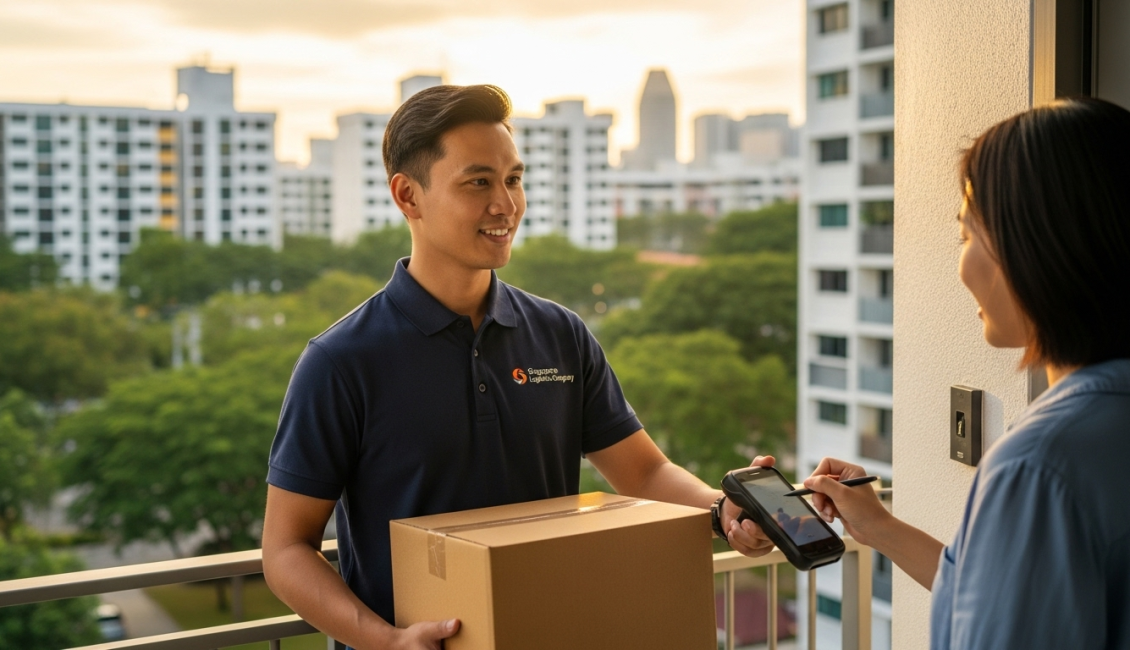
The 2025 last-mile landscape for Singapore
Singapore’s e-commerce growth shows no sign of slowing, and the pressure on last-mile networks is intensifying. Consumers expect faster, cheaper and greener deliveries, while businesses need reliable fulfilment that fits the island’s dense urban fabric. This article breaks down what matters for singapore last mile delivery in 2025 and how a modern singapore logistics company can help you stay competitive.
What’s changed since 2022: market dynamics and customer expectations
- Rapid e-commerce normalization: Post-pandemic buying patterns have stabilized but with higher baseline parcel volumes, especially for groceries, health, and D2C goods.
- Time-critical windows: Same-day and sub-3-hour deliveries moved from premium options to expected service levels for many categories.
- Sustainability is mandatory: Consumers favour brands that demonstrate lower carbon footprints and clear circular strategies.
- Contactless, flexible delivery preferences: Parcel lockers, nominated time slots and live-driver tracking are now table stakes.
These shifts force logistics providers to rethink the final 1–10 kilometres of a parcel’s journey to match cost, speed and sustainability targets.
Key 2025 trends shaping last-mile delivery in Singapore
- Electrification and micro-mobility
EV adoption for last-mile fleets has accelerated thanks to lower total cost of ownership and government incentives. Cargo e-bikes and compact electric vans are particularly effective in dense neighbourhoods and for curbside drop-offs near HDB estates.
- Micro-fulfilment and dark store networks
To achieve true same-day coverage without exploding costs, logistics providers are decentralising inventory. Micro-fulfilment hubs located inside or near urban catchments reduce travel time and enable hyperlocal inventory strategies.
- Automation and AI-driven routing
Advanced route optimisation, dynamic dispatch and predictive ETAs driven by AI reduce empty miles and idle time. These tools also enable multi-drop, mixed-vehicle routing that matches parcel size with the most efficient vehicle.
- Parcel aggregation and smart lockers
Aggregation points and parcel locker networks reduce failed delivery attempts and lower per-parcel delivery costs. Integration between e-commerce checkouts and locker availability is now common practice.
- Multimodal and curbside orchestration
Combining vans, ebikes, and on-foot couriers for the final leg improves accessibility in restricted zones and during peak congestion. Coordinating drop-off points and temporary loading zones is a growing operational skill.
Technology to watch: practical applications for operators and shippers
- Real-time visibility platforms that offer end-to-end tracking and ETAs—crucial for consumer communication and SLA compliance.
- Predictive demand forecasting tying store inventory to local delivery capacity to prevent stockouts and inefficient rush fulfilments.
- Mobile driver apps with proof-of-delivery (POD) options including photo, OTP and contactless confirmation to reduce disputes and returns.
A reliable last mile delivery provider will combine these tools with local operational know-how to drive down costs and increase delivery success rates.
Navigating Singapore’s urban constraints
Singapore’s unique urban environment—high-rise residential blocks, strict loading rules, and limited street-level space—requires tailored strategies:
- HDB access: Trained couriers and micro-fulfilment sites near estates reduce staircase and lift delays.
- Loading zone coordination: Pre-authorised windows, timed slots and partnerships with mall operators can avoid fines and time-consuming waits.
- Peak congestion strategies: Night-time fulfilment and off-peak delivery can be viable for non-perishable goods when permitted.
Choosing a partner who understands local municipal rules and has established on-the-ground relationships matters more than raw fleet size.
Sustainability: what counts in 2025
Green credentials go beyond electric vehicles. Leading Singapore logistics companies measure and report:
- Carbon-per-parcel and actionable reduction targets
- Load factor optimisation to reduce percentage of empty slots
- Reusable packaging and reverse logistics for returns
Prominent operators now publish emission baselines and roadmap updates—buyers increasingly use this data in procurement and marketing.
Operational playbook for businesses working with a Singapore logistics company
- Segment deliveries by urgency and parcel type — separate same-day essentials from standard e-commerce items.
- Integrate systems — ensure your warehouse management and storefronts communicate with the carrier’s dispatch platform.
- Localise stock — use micro-fulfilment centres for frequently ordered SKUs in high-density suburbs.
- Use multiple delivery modes — match cargo ebikes for inner-city drops and vans for bulk routes.
- Define KPIs — track on-time delivery, failed attempts, cost-per-delivery, and customer satisfaction.
If your logistics partner cannot provide transparent KPIs and route-level visibility, expect inefficient spend and unhappy customers.
Choosing the right Singapore logistics company in 2025
Evaluate potential partners against these criteria:
- Local presence and last-mile density: Operators with established micro-fulfilment sites and local courier networks are faster and more reliable.
- Technology maturity: Look for integrated tracking, API-first platforms and data analytics to optimise routes and inventory.
- Sustainability commitments: Check verified emissions reporting and tangible plans for fleet electrification or green offsets.
- Flexibility: The ability to scale during promotions, handle returns, and support B2B and B2C flows is critical.
- Compliance and safety: Ensure carriers meet local licensing, insurance and labour standards.
A well-chosen Singapore logistics company offers a partnership model—operational recommendations, not just transport.
Metrics that matter for last-mile performance
- Delivery success rate on first attempt
- Average delivery time (order to doorstep)
- Cost per successful delivery
- Carbon emissions per parcel
- Customer satisfaction (NPS or CSAT)
Benchmark these KPIs quarterly and demand transparency in reporting. Digitally enabled carriers should be able to provide dashboards and downloadable data.
Practical steps for shippers to reduce cost and improve experience
- Offer flexible delivery options at checkout (time slots, lockers, pick-up points).
- Consolidate shipments where possible to improve load factor.
- Use predictive analytics to pre-position inventory for flash promotions.
- Provide clear communication and proactive notifications to reduce missed deliveries.
For businesses focused on margin improvement, small changes in parcel density and customer communication often yield outsized savings.
Final takeaways for 2025
Singapore’s compact geography and tech-forward environment make it a proving ground for last-mile innovation. In 2025, successful delivery strategies combine decarbonisation, hyperlocal inventory, and intelligent routing. Selecting a partner who brings both local operational expertise and modern technology is the fastest route to lower costs, higher delivery success, and happier customers. Consider the five core capabilities—local footprint, technology, sustainability, flexibility and transparency—when evaluating any logistics company.